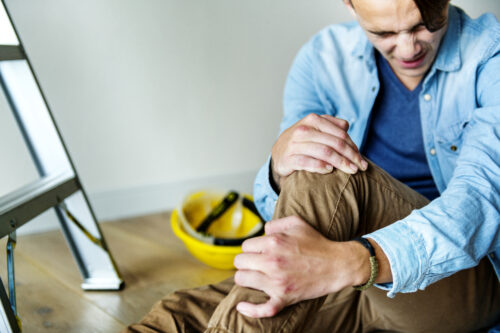
Every year thousands of people are injured, some seriously, because of the negligence of property owners. Premises liability law covers slip, trip, and falls due to dangerous conditions on public or private property, and holds the property owner, or owners, responsible for any resulting medical bills, pain and suffering, lost wages, etc.
The Duty of Property Owners
Property owners owe different levels of responsibility to people using their land or establishment, depending on the legal category of the person in question. The law recognizes three main categories: invitees, licensees, trespassers. The laws are different for each of the above groups, and vary from state to state.
In cases involving slip and fall accidents, generally plaintiffs must prove that the property owners either failed to maintain the property or created unsafe conditions which caused the injury, or knew about the dangerous premises or unsafe hazard but didn’t alert visitors or tenants to this fact. Also important is whether or not the unsafe condition was permanent or temporary.
Dangerous Indoor Conditions
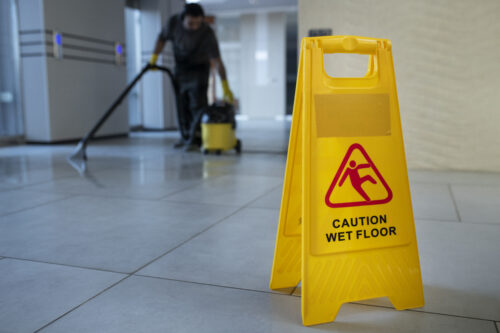
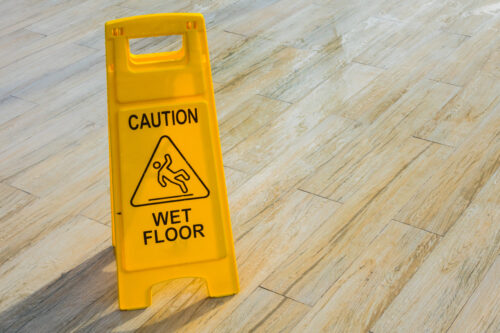
Floors being uneven often result in slips and falls. The cause of unevenness can usually be attributed to lack of maintenance or upkeep. In addition, commonly within grocery stores, failure to provide adequate signs for water on the floor, failure to provide proper barriers to areas that are not open for walking, using excessive or uneven floor wax, and allowing torn, uneven, or bulging carpet areas to go unrepaired.
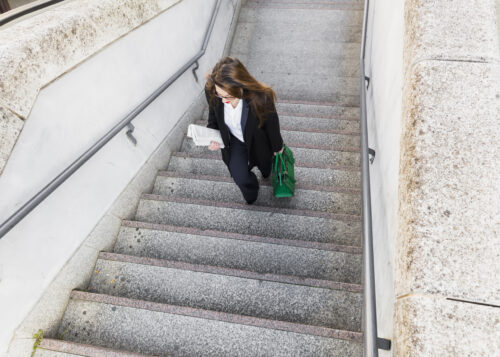
Stairs undergo normal wear and tear, and the property owner is responsible for maintaining their upkeep. The edges of the stairs can become rounded, the stairs’ non-stick surface, which is required in most states, can wear out, and a handrail can be broken or missing. All of these can be attributed to owner’s negligence and can result in injury.
Escalators and Elevators are held to high standards under the law because they are designed to carry passengers. Property owners must fulfill these high standards or risk a lawsuit when users slip, trip or fall.
Dangerous Outdoor Conditions
Ice or Snow Build-up: Granted, premises owners are not required to remove snow and ice that accumulates as a result of normal winter weather. But this does not remove all responsibility. The law states that if the premises owner/manager, or a condition of the premises causes an unnatural accumulation of snow and/or ice, the owner can be held liable. An example of an unnatural accumulation might be a walkway that is perpetually shaded by surrounding building or trees, and thus is covered in a thin sheet of ice while all other walkways are ice-free. Another example might be snow that accumulates on the roof of a building and then drips down via a defective gutter and downspout and refreezes as ice.
Inadequate Outdoor Lighting: Inadequate lighting can lead to pedestrian injuries in parking lots or on sidewalks. The property owner can be held liable if they knew or should have known about the dangerous situation and failed to remedy the problem in a reasonable amount of time.
Sidewalks: Most sidewalks are owned and maintained by the city or county. However, if a public sidewalk is used exclusively by the property owner’s clientele, the owner can be held liable for the sidewalk’s dangerous conditions.
Parking Lots: Parking lot owners are legally responsible for maintaining the safety of their lots. This includes any protrusion in the surface of the parking lot that contributes to an injury.
Store or Premises Owner Liability: Because the people in stores are there primarily for the benefit of the store owner (i.e. to purchase their goods or services), owners have a considerable responsibility to keep their premises safe. Store owners must inspect their property for potential dangers and then either fix the problem in a reasonable amount of time or adequately warn the public of the dangers. If they do not, they can be liable for any injuries that may result.
Every year thousands of people are injured because of dangerous conditions on public or private property. Slip, trip, and fall accidents often occur when property owners fail to properly maintain their premises or warn visitors about potential hazards.
Premises liability law allows injured individuals to seek compensation when unsafe conditions lead to injuries. Property owners have a responsibility to keep their property reasonably safe and to address dangerous conditions that may put visitors at risk.
If a property owner fails to maintain safe conditions or neglects to repair known hazards, they may be held legally responsible for injuries that occur as a result. Victims of slip and fall accidents may be entitled to compensation for medical expenses, lost wages, and pain and suffering.
Understanding your rights after a slip and fall accident can help you determine whether negligence played a role in your injury and whether you may have a legal claim.

The Duty of Property Owners
Property owners owe different levels of responsibility to people who enter their property. In general, they must maintain reasonably safe premises and warn visitors about potential hazards that could cause injuries.
In slip and fall cases, an injured person must typically show that the property owner either created the dangerous condition, failed to repair it, or knew about the hazard but did not warn visitors about the risk.
Courts often consider several factors when determining liability. These may include how long the dangerous condition existed, whether the property owner had a reasonable opportunity to fix it, and whether visitors were adequately warned about the hazard.
Understanding these responsibilities is important because it helps determine whether a property owner may be legally liable for injuries that occur on their premises.